 EN
EN

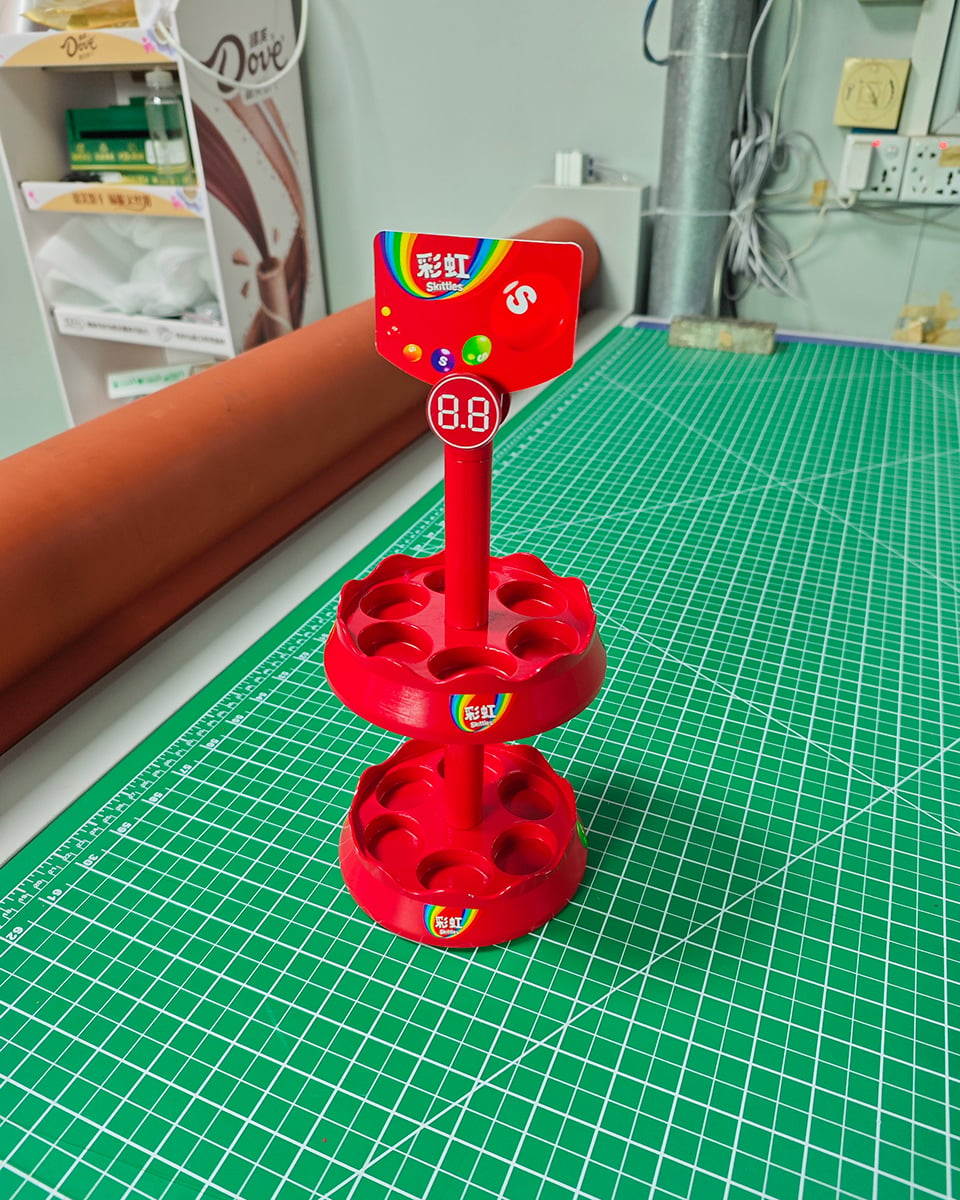
Choosing the right candy display is one of the most consequential decisions a retailer makes when setting up or refreshing a store layout. The physical footprint of your display directly influences product visibility, customer traffic flow, and ultimately, your sales per square foot. Too large, and the unit overwhelms the space, blocks sightlines, and creates a cramped shopping experience. Too small, and it fails to carry enough product variety to attract impulse purchases or satisfy different customer preferences.
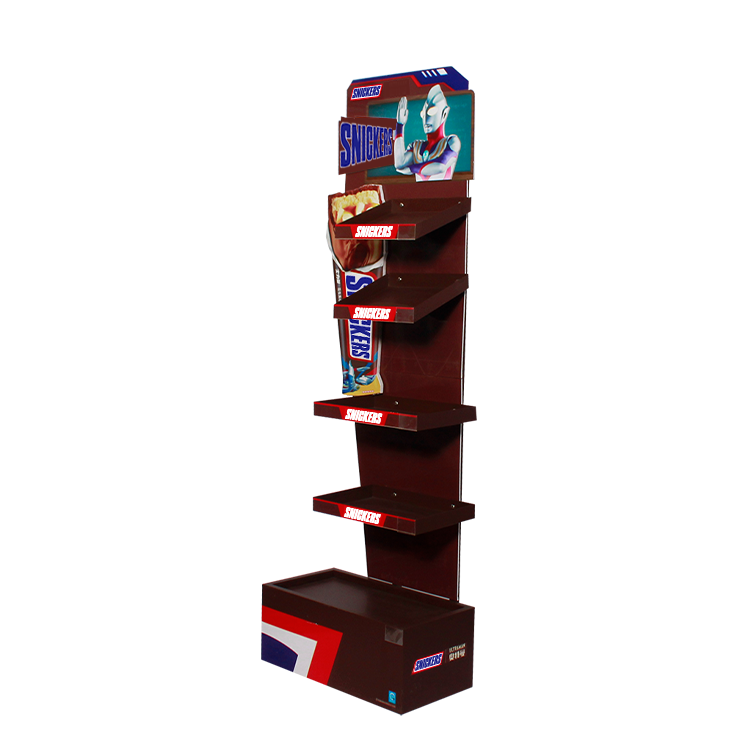
Retail spaces vary enormously — from compact convenience store corners to wide-aisle supermarket end-caps and sprawling gift shop floors. Understanding the relationship between your available square footage, your customer flow patterns, and the structural dimensions of a candy display is essential before making any procurement decision. This guide breaks down how to evaluate your space systematically and match it to the right display size and configuration for maximum commercial impact.
Understanding Your Retail Space Before Selecting a Candy Display
Measuring the Available Floor Area Accurately
Before you can select an appropriately sized candy display, you need precise measurements of the space where it will live. This means more than just estimating a corner or a wall section by eye. You should measure floor area in both dimensions — width and depth — and factor in any architectural constraints such as columns, doorframes, electrical outlets, air vents, or existing shelving units that cannot be relocated.
Most retail planners recommend leaving a minimum clearance of 36 inches (approximately 90 cm) on all sides of a freestanding candy display to ensure accessible customer approach from multiple angles. This clearance also satisfies general retail accessibility guidelines in many markets. When you subtract this clearance from your raw floor space, the resulting figure gives you the true usable footprint for your display unit.
For wall-mounted or counter-top candy display configurations, the calculation shifts. You measure the linear wall space or counter length available rather than floor area. Even a narrow wall section of 24 inches can accommodate a well-designed counter candy display unit if the vertical dimension is used strategically with multiple tiered shelves.
Factoring in Customer Traffic Flow and Sightlines
The dimensions of a candy display interact directly with how customers move through your store. A tall, four-sided rotating candy display placed at the front of a small convenience store may create a natural gathering point that drives impulse purchases, but the same unit placed mid-aisle in a narrow corridor can obstruct flow and generate shopper frustration rather than engagement.
Retailers should observe or map their peak-hour customer flow before committing to a display size. High-traffic zones near checkout counters, store entrances, and end-cap positions are typically strong performers for compact to medium-sized candy display units because customers are already pausing in those areas. In lower-traffic zones like side aisles, a larger candy display with greater visual height can attract attention from a distance and pull customers toward it.
Sightlines matter too. Candy display units that stand taller than 60 inches may block visibility across open-floor retail environments, which disrupts the sense of spaciousness that encourages browsing. In specialty stores or boutiques where the candy display is intended to be a visual centerpiece, taller units with well-designed structure become an asset rather than a liability.
Common Candy Display Size Categories and Their Space Requirements
Countertop and Small-Format Candy Displays
Countertop candy display units are the most compact option and are designed to sit directly on a checkout counter, retail desk, or point-of-sale surface. These units typically range from 8 inches to 18 inches in width and 10 to 20 inches in height. They occupy virtually no floor space and are ideal for environments where every square inch of the floor is already in use.
A well-placed countertop candy display positioned near the point of payment captures last-minute impulse purchases effectively. Candy bars, individually wrapped sweets, gum, mints, and small confectionery bags are the most common product types in this format. Despite their small size, these units can drive disproportionately high sales per square inch when positioned correctly because of the natural dwell time customers experience at a checkout point.
Retailers operating in kiosk environments, small cafés, pharmacies, or bakeries often find the countertop candy display to be the optimal fit. The low footprint means there is no floor space commitment, and the unit can be repositioned easily as store layouts evolve. Metal countertop displays with wire grid or tiered shelf construction tend to be especially durable and visually clean for these settings.
Medium Freestanding Candy Displays
Medium freestanding candy display units typically span between 18 and 36 inches wide, 12 to 24 inches deep, and 48 to 66 inches tall. This size category is among the most versatile across retail formats. It fits comfortably in end-cap positions at the end of a store aisle, in open floor areas near a store entrance, or along a wall with sufficient clearance maintained on at least two sides.
For a standard convenience store or small specialty retailer with total floor areas between 500 and 1,500 square feet, a medium candy display is often the ideal primary display option. It offers enough shelving capacity to carry multiple product categories — bagged candy, boxed chocolates, novelty items, and seasonal confectionery — without monopolizing floor space or disrupting the visual balance of the store layout.
The height of a medium candy display also plays a role in product accessibility. Units in the 48 to 60-inch height range allow products to be visible and reachable for adults and older children without requiring special placement. If your customer demographic includes young children or elderly shoppers, concentrating featured candy products on the lower two-thirds of the display improves accessibility and reduces the chance of product disturbance on higher shelves.
Large and Multi-Tier Candy Display Structures
Large candy display structures typically begin at 36 inches wide and can extend to 72 inches or more in modular or connected configurations. Their depth often runs between 18 and 30 inches, and their height can reach 72 to 84 inches for maximum vertical capacity. These units are designed for retailers with dedicated confectionery sections, high-volume candy sales, or large open retail floors where spacious layouts are the norm.
Supermarkets, large gift shops, candy specialty stores, and warehouse-style retail environments are the primary contexts where a large candy display structure genuinely delivers value. The increased capacity means more SKUs on the floor, which reduces restocking frequency and allows for rich visual merchandising with layered product arrangements, signage, and brand-themed sections.
Retailers considering large candy display structures should carefully evaluate their aisle width. A unit with a 30-inch depth placed in an aisle that is 60 inches wide leaves only 30 inches of clearance on the opposing side, which is tight for comfortable two-way customer flow. The recommended minimum aisle width when deploying a large freestanding candy display on one side is 72 inches, allowing 42 inches of customer access corridor after accounting for display depth.
How Space Constraints Should Shape Your Candy Display Configuration
Vertical Space as a Strategic Resource in Small Retail Environments
When horizontal floor space is limited, the most effective strategy is to maximize vertical capacity. A candy display designed with four to six shelf tiers in a footprint of 18 by 14 inches can hold nearly as many product units as a wider, shallower unit with only two or three shelves. Vertical candy display configurations are common in urban convenience stores, airport retail kiosks, and service station shops where the floor is a premium resource.
Metal candy display stands with adjustable wire shelving are particularly effective in vertical configurations because shelf spacing can be customized to accommodate different confectionery packaging heights. A 3-inch gap between shelves works well for flat candy bars and gum packs, while a 6 to 8-inch gap is needed for taller bags or boxed chocolate selections. This flexibility allows a single candy display unit to handle a diverse product assortment without wasted vertical space.
It is also worth considering the ergonomics of very tall candy display configurations. Products placed above 66 inches become difficult to see from a browsing position and are often overlooked by customers. Retailers who use tall units should prioritize placing high-margin, high-visibility products at eye level between 48 and 66 inches, reserving upper and lower zones for secondary SKUs, bulk items, or value-oriented confectionery lines.
Modular and Expandable Candy Displays for Growing Space Needs
Some retailers face a space situation that is not fixed — a new location in the early stages, a seasonal pop-up, or a store undergoing phased renovation. In these contexts, a modular candy display that can be expanded or reconfigured over time offers significant practical advantages. Starting with a compact two-shelf unit and adding side extensions or additional shelving modules as space becomes available reduces upfront capital cost while keeping future flexibility open.
Modular candy display systems built from metal frames with standardized attachment points are particularly well-suited to this approach. The structural consistency allows new sections to integrate seamlessly with existing units without creating visual discontinuity. For retailers building toward a dedicated confectionery section, a modular candy display strategy allows the fixture investment to scale alongside the business rather than requiring a complete fixture replacement when space or assortment needs change.
Retailers operating across multiple locations also benefit from modular candy display systems because the same core units can be configured differently in each store based on its unique spatial constraints. A two-module configuration works in a compact urban outlet while a four-module arrangement suits a larger suburban store, yet both use the same base hardware for procurement and maintenance efficiency.
Retail Environment Types and Their Ideal Candy Display Dimensions
Small-Format Stores and Convenience Retailers
Small-format retail environments — typically stores under 1,000 square feet — demand candy display solutions that are compact, high-density, and visually impactful without consuming disproportionate floor space. For these environments, countertop units and medium freestanding candy display units in the 18 to 30-inch width range are generally the most appropriate. Wall-mounted candy display brackets or slatwall-mounted display bins offer additional capacity without any floor commitment at all.
Placement strategy is especially critical in small-format stores. The checkout counter remains the highest-converting location for a candy display in this environment, followed by the area immediately inside the entrance. Even a single well-positioned candy display unit with a strong product mix can generate significant incremental revenue in a small-format store without requiring additional floor space investment.
The visual weight of a candy display also matters more in small spaces. A heavily branded, brightly colored unit may feel overwhelming in a compact store where the overall aesthetic is minimalist or premium. Neutral metal candy display structures with clean lines integrate more smoothly across a variety of small-format retail environments while still drawing appropriate visual attention to the confectionery category.
Large-Format Retailers and Dedicated Confectionery Sections
Large-format retailers with dedicated confectionery aisles or gift food sections benefit most from wide, multi-tier candy display configurations that support category depth and strong visual merchandising. In a space allocation of 10 to 20 linear feet of aisle space, a series of connected large candy display units or a combination of wall-back shelving and freestanding floor displays creates a destination zone that encourages extended browsing and larger basket sizes.
Product zoning within a large candy display section increases purchasing efficiency. Organizing the candy display by confectionery type — chocolates in one zone, gummies and chewy candy in another, sugar confectionery and mints in a third — helps customers navigate quickly and find what they are looking for. Clear zoning on a large candy display also creates opportunities for cross-sell adjacency where complementary products are positioned nearby.
Large-format environments also allow for seasonal rotations within the candy display layout. A modular candy display system makes it straightforward to introduce themed seasonal sections — Valentine's Day chocolates, Halloween novelty candy, Christmas confectionery gift sets — without removing the core permanent candy category. This seasonal flexibility generates repeat customer visits and creates a sense of freshness in the category throughout the year.
FAQ
How much floor space should I allocate for a freestanding candy display?
A standard medium freestanding candy display requires approximately 2 to 4 square feet of floor space for the unit itself, plus an additional 9 to 12 square feet of surrounding clearance area to allow comfortable customer access from multiple sides. In very tight spaces, a wall-backed placement can reduce the clearance needed on one side, effectively halving the surrounding space requirement while still keeping the display fully accessible from the front and sides.
Can a candy display be effective in a store with less than 300 square feet of total retail floor area?
Yes, a well-chosen candy display can perform extremely well even in very small retail environments. In stores under 300 square feet, the most effective approach is to use countertop candy display units at the point of sale and wall-mounted or slatwall-mounted display components that use vertical wall space rather than floor area. These configurations keep the floor open for customer movement while still providing strong product visibility and impulse purchase triggers.
What height is best for a candy display to maximize product visibility?
The sweet spot for product visibility on a candy display is between 36 and 66 inches from the floor. This range covers the natural eye-level zone for most adult shoppers and ensures that featured products receive the visual attention they need to drive purchase decisions. Products placed below 30 inches or above 66 inches are significantly less likely to be noticed during a normal browsing pass, so those shelf zones should be reserved for secondary or bulk products rather than hero SKUs.
Is a rotating candy display a good choice for small spaces?
A rotating candy display can be an excellent choice for small spaces because it offers 360-degree product access from a single floor position, effectively multiplying the number of product facings without increasing the physical footprint. A rotating candy display unit with a 12 to 18-inch diameter can carry a surprisingly large product assortment while occupying minimal floor area. The rotation mechanism also adds a dynamic visual element that draws customer attention, which is especially valuable in compact or cluttered retail environments.
Table of Contents
- Understanding Your Retail Space Before Selecting a Candy Display
- Common Candy Display Size Categories and Their Space Requirements
- How Space Constraints Should Shape Your Candy Display Configuration
- Retail Environment Types and Their Ideal Candy Display Dimensions
-
FAQ
- How much floor space should I allocate for a freestanding candy display?
- Can a candy display be effective in a store with less than 300 square feet of total retail floor area?
- What height is best for a candy display to maximize product visibility?
- Is a rotating candy display a good choice for small spaces?